
Columbia Riverkeeper Consistently spends $9-$10K of Google Ad Grant and Delivers Report Downloads, Sign-Donations, and Sign-ups
Client: Columbia Riverkeeper (nonprofit)
Service: Google Ads Grant Scale & Monthly Management
Columbia Riverkeeper is a nonprofit based in Hood River and Portland, Oregon, who protects and restores the water quality of the Columbia River and its tributaries across Oregon and Washington. They have thorough, helpful content about projects, petitions, tribes and environment issues along the entire Columbia River. Their goal is to grow their mission with petition sign-ups, file downloads, newsletter sign-ups and website engagement.
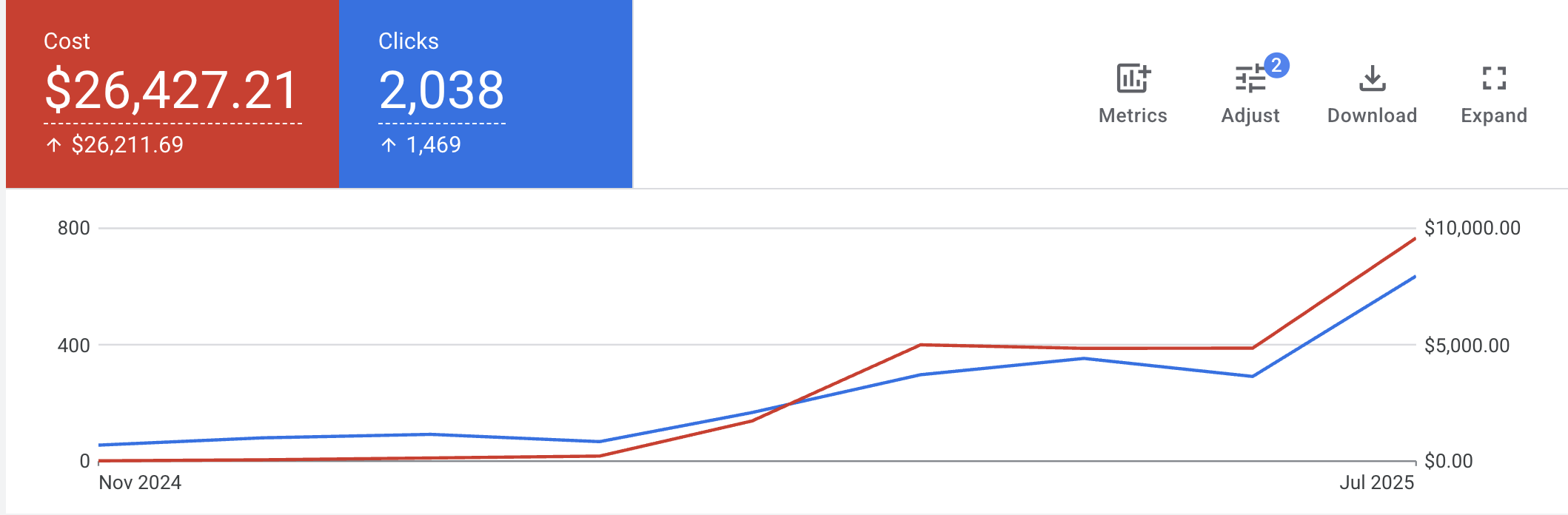
When we took over Columbia Riverkeeper's Google Ad Grant, the account was barely running and the client wasn't sure ads were worth continuing. Within 6 months, we had it spending consistently between $9K-$10K/month thanks to our campaign structuring, keyword strategy and improved tracking, Google was able to better show ads to people who would respond to Columbia Riverkeeper ads. Within that year, we uncovered a topic that resonated so strongly with their core audience that it now anchors the entire account: data centers.
Google Ads Grant Over Time
139
Petition Sign-ups
Results
Our strategic changes led to significant performance improvements:
The Columbia Riverkeeper website has a robust content strategy, which helps us grow our campaigns, ad groups, and test landing pages.
800+
Report Downloads
43
Donations
33
Newsletter Sign-up
Data Center Downloads: 18% traffic downloads our Data Center PDF
Engaged Traffic Growth: Ad traffic has engagement of over 1 minute per user.
Cost Efficiency: The goal of the grant is to bring awareness of the projects happening on the Columbia Riverkeeper, and encourage petition and newsletter sign-ups. We now spend the nearly the $10K/month budget in only Oregon and Washington.
Data-Driven Insights: We track the actions on the site people make, such as report downloads, petition and newsletter signs-up, contact and donation form fills, and engagement time. With easy-to-understand tracking in place, Columbia Riverkeeper can now make better marketing decisions, focusing their budget on high-performing channels and campaigns.
Columbia Riverkeeper had a $10,000/month Google Ad Grant, but it was doing almost nothing. In our first month, the account generated just 53 clicks and 166 impressions, and spent under $13 of the $10,000 available.
The core problem was that tracking wasn't set up properly, so the account couldn't bid above $2/click under Maximize Conversions. We changed this by creating tracking on form submissions, downloads, and even optimizing for 30 second page views (engagement).

Section Styles teal-gradient-text-boxes
The Challenge:
The Solution:
The grant went from a dormant asset to a reliable, always-on channel feeding traffic to the organization's advocacy work.

Implementing Ongoing Conversion Tracking:
We set up conversion tracking in GA4 and GTM, enabling Columbia Riverkeeper to track data center downloads, petition sign-ups, contact us form fills and many more events on the site. As new content is created, we can add additional tags to track new events and downloads, allowing us to make decisions based off of real data - not opinions.
Campaign Optimization + BIDDING STrategy Testing:
We improved campaign structure by segmenting ads by focus areas, allowing for more targeted and relevant ad copy that matched user search intent. By testing Max Clicks, Max Conversion and TargetCPA, we were able to find the best bidding strategy to meet the goals: engaged traffic and downloads.
Keyword Management:
With ongoing keyword research and negative keyword matching, we have had a stable CTR (click-through-rate) between 6 and 9%.
Ads Grant Traffic Taking Action:
The data-center focus didn't just draw clicks, it drove valuable action on the site. Since testing the data center campaign, the account has generated 800+ downloads of Columbia Riverkeeper's data-center reports, with roughly 1 in 5 data-center ad clicks resulting in a report download. Alongside these, the grant delivered 139 petition sign-ups, 43 donations, and 33 newsletter sign-ups, real supporter actions, all funded entirely by the Google Ads monthly grant.

The conclusion:
Overall, Found Marketing turned a dormant Google Ad Grant into an engagement engine. By creating and promoting educational content about data centers and other regional issues, we connected thousands of Oregonians and Washingtonians with the fight for a healthy Columbia River.