
Finding the Real Buyer: What Three Channels Revealed About a Rugged Device Launch
Service: Paid Search & Social Ads
A NASDAQ-listed manufacturer of ultra-rugged mobile devices was launching its flagship smartphone to industrial and public-sector workforces: construction crews, first responders, delivery drivers, and marine engineers.
The company sells through wireless carriers rather than direct, which made the conversion clear from the outset: an outbound click from the site to national wireless carriers, the moment a buyer leaves to purchase. Found Marketing built the tracking to capture that handoff, then ran audience and creative testing across three channels to find out who the real buyer was.
Advertising Channels Tested



The results:
Section Styles large-numbers
85%
decrease in cost per click (Linkedin)
5X
increase in conversion rate
The Strategy
Each channel was given a different job, and measured against it.
Google Ads was expected to capture lower-funnel, higher-intent demand. Search is driven by keyword intent — someone typing "rugged cell phones" is already shopping — so Google was expected the generate higher outbound clicks and page engagement than social channels.
Reddit and LinkedIn Ads were upper-funnel. Their job was to introduce a new product and an unfamiliar brand to potential customers who weren't searching yet, and to bring them onto the website engaged enough to learn something.
Judging all three against outbound carrier clicks alone would have told us very little in the first two months. So alongside the conversion, a second layer of tracking measured engagement: "Explore More" and "Learn More" button clicks on every page, 30- and 60-second session thresholds, scroll depth, video plays, and pages per session.
These user behavior events were a way to tell which audiences were sending genuinely interested buyers rather than accidental clicks.
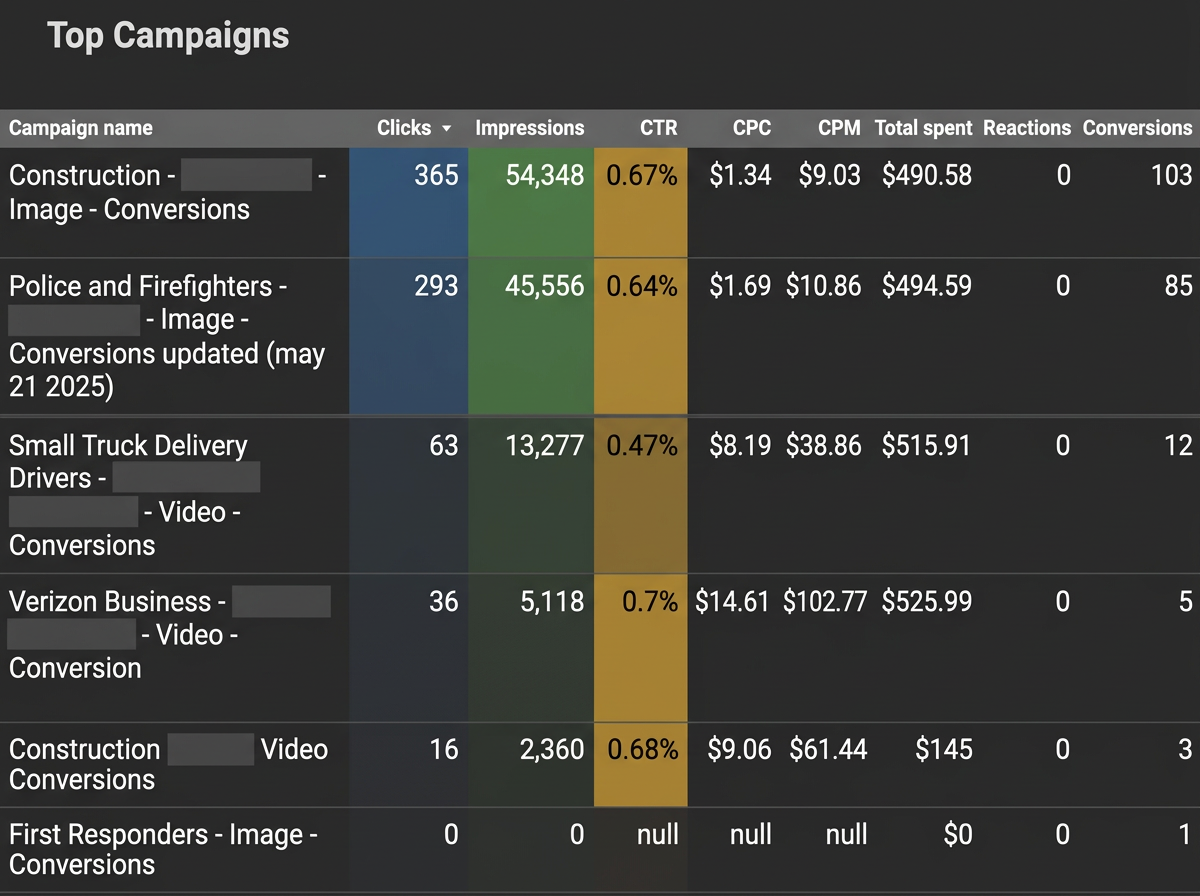
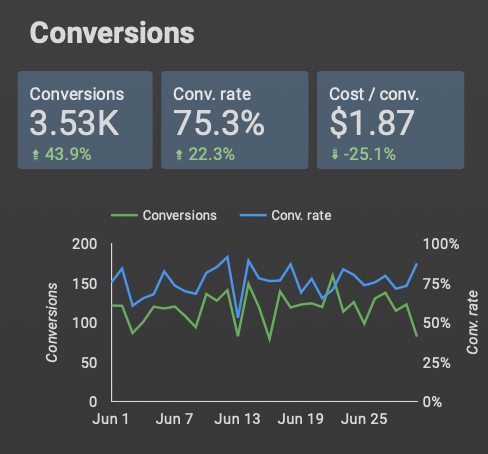
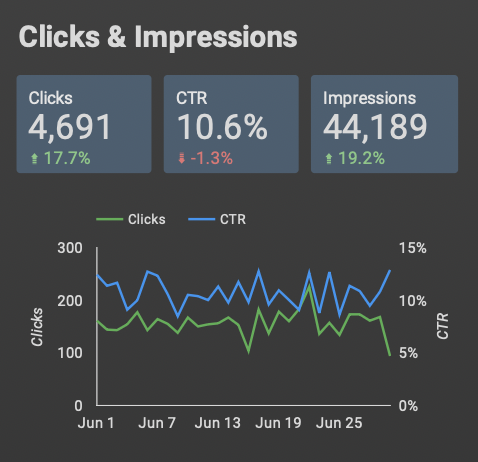
Everything was reported into a single Looker Studio (Google Data Studio) dashboard covering all three channels. (Screenshots on left).
The rugged phone company needed to build awareness for a new flagship device and drive qualified buyers to its carrier partners within a fixed launch budget. The company faced:
No Conversion Measurement: Nothing was tracked when a visitor visited the website. We couldn’t optimize for outbound clicks or engagement.
Untested Audience Assumptions: The launch plan named six occupational audiences, but none had been validated against real buying behavior.
Oversized Audiences: Initial paid social segments were built too broad to deliver efficiently, producing very high costs per click and almost no engagement. This took time to tweak and learn to find our niche audience.
Section Styles teal-gradient-text-boxes
The Challenge:
The Solution:
Found Marketing developed and implemented a multi-faceted strategy to a/b test audiences, copy, creative and landing pages.
Google Ads
Three campaigns were built around distinct intent: rugged phone terms, industry-specific searches, and competitor conquesting. Every campaign optimized toward carrier clicks rather than clicks, supported by a negative keyword list that excluded branded searches and irrelevant queries.
What we tested: keyword themes, industry-specific ad groups, competitor conquesting, ad copy, and landing pages.
Results:
The construction ad group reached a 48% conversion rate (the highest in the account) because keywords and landing page matched what the searcher actually wanted.
An industry-specific landing page tested against the generic product page delivered 5x the conversion rate and 50% higher CTR, a result that repeated on a second audience.
Account click-through rate held above 10% with average sessions over two minutes. Highly engaged audiences.
Reddit Ads
We tested audiences and ads on a new channel for this company, Reddit. We tested the same blue-collar audiences, with a brief to reach people who weren't searching and get them engaged on the site.
What we tested: occupational audiences against one another, city-level targeting against national, and creative formats.
Results:
Reached nearly 500,000 users at a $2.99 CPM and $0.73 per click, holding 56-second average sessions. This was roughly eleven times the engagement of LinkedIn traffic.
A city-level campaign, built on the hypothesis that locally recognizable imagery would beat generic national creative, returned 0.34% CTR against 0.65% nationally at nearly three times the cost per click. The hypothesis failed and budget returned to national targeting.
Reddit was the most cost-efficient awareness channel of the three for this audience, and was recommended for continued investment.
LinkedIn Ads
Launched across six audiences: construction, first responders, nurses, delivery drivers, marine engineers, and business users. Each had four ad variations to introduce the product by job title.
What we tested: audience sizing, seniority, ad copy, creative format, and imagery.
Results:
Early costs were unsustainable: roughly $20 per click at a 0.2% click-through rate. The problem was audience construction, not creative — the segments had been built far too broadly to deliver efficiently. Rebuilding them dropped cost per click to between $1 and $4 within three weeks, and it stayed in that range for the rest of the engagement.
Ad copy testing produced the clearest creative finding of the engagement. A single-idea line — "A case won't save your phone. But [the rugged phone company name] [product] doesn't need one" — reached 1.3% CTR against 0.7% for specification-led copy. It became the basis for creative across all three channels.
One narrow audience posted the highest CTR in the account at 0.83% and looked like the winner until the engagement data showed it was a few thousand people, saturated within weeks, and costing up to $127 per click.
LinkedIn delivered reach and the audience intelligence that shaped targeting on every other channel. What it did not deliver was traffic that stayed on the site, so budget was progressively reallocated to the channels that did.
What the Testing Told Us
Construction was the buyer. Three platforms tested the same occupational segments independently and returned the same verdict that construction outperformed everywhere, first responders underperformed everywhere. That consistency is what made the finding safe to act on.
The simplest message won. A single sentence beat a specification list by nearly double the click-through rate. A later test found something that we hadn't anticipated: copy emphasizing how the phone looked rather than how tough it was produced a 10–30% higher CTR. For a product sold entirely on durability, buyers were also responding to design.
Geography didn't matter. The audience responded to the job, not the zip code. This was a cheap test with a clear answer, run before the same hypothesis could be repeated at scale.
Placement mattered more than expected. Carrier buttons at the top of the page earned three to four times the clicks of those at the bottom. Scroll-depth tracking explained why: with roughly 90% of traffic on mobile, buttons positioned low were rarely reached at all.
The conclusion:
Giving each channel a defined job (and the tracking to be judged against it) is what made the testing useful. Google was measured on carrier handoffs. Reddit and LinkedIn were measured on whether they could introduce an unfamiliar brand and hold attention on the site.
The audience turned out to be narrower than planned, the winning message was the simplest one written, and the geographic hypothesis was wrong. None of that was knowable in advance. It became knowable within weeks, and the budget followed.
