What I’ve learned from running ChatGPT ads for myself
ChatGPT Ads are still in beta, but they've become much more interesting for performance marketers since conversion tracking is now something we can optimize for.
Before June 2026, we had two options for campaign goals: clicks or reach. And I’ve tried both.
With a click campaign, I got clicks. With a reach campaign, I got impressions and only 3 clicks!!
Now with conversions, I can optimize for people who submit my contact form and ChatGPT can hopefully optimize for this event. All I needed to do was set up the ChatGPT conversion tracking tag via GTM for my website.
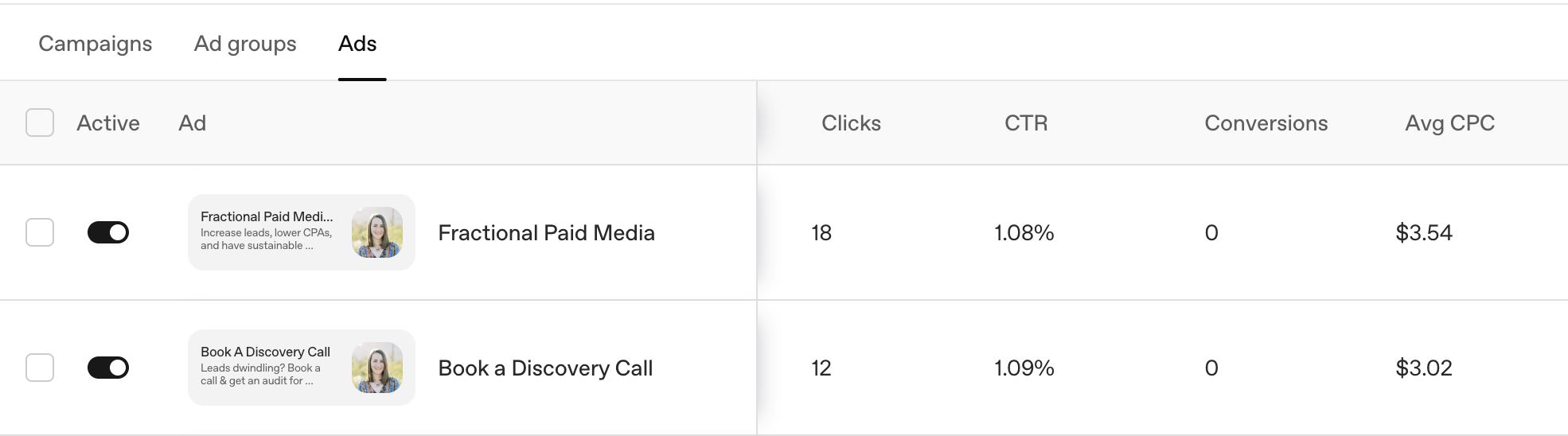
Testing conversion campaign to drive leads.
Early Results
After the first day of testing a conversion campaign, I saw:
2,764 impressions
30 clicks
1.09% click-through rate
0 leads (conversions)
Set up: How to set up a campaign and ad group?
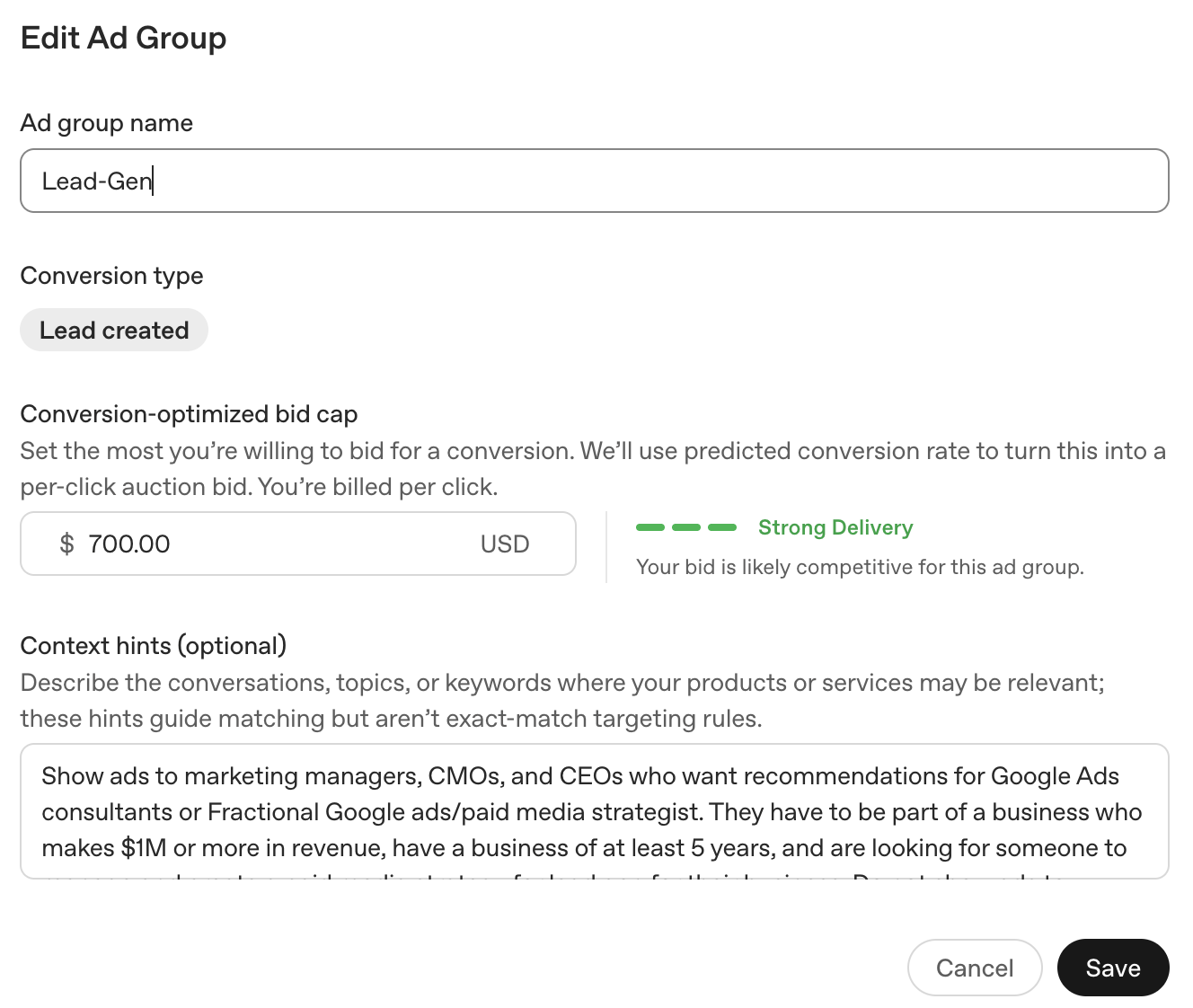
Creating a campaign in ChatGPT is similar to other platforms. You create a name, objective (reach, clicks or conversions), location, daily budget and start and end date. Then on to the ad group where you have a little more distinction.
For the Ad Group you need a name, a conversion cost goal (aka CPA). Anything below $700 ChatGPT gave me the message: Your bid may be too low to deliver reliably. Hence a high CPA. And most importantly, “Context hints” which is optional. I gave it a thorough hint of who I wanted to target, who I didn’t want to target, and what companies like they work for and some example search phrases or prompts I want my ads to appear for. I tried to be thorough, but I would have to do several ad groups, each with a different hint to better understand how hints work and which hint works best.
Creating ads is simple. You have a headline, description and image.
To be completely honest. ChatGPT is the simpliest platform to run ads on. There is no research available, like in Google’s keyword planner. Ther eis no match types, there is no Pmax, display, video and a multiple of other options. What is tricky is setting up the conversion tracking tag and then cross-checking your ChatGPT data with GA4.
The Biggest Challenge is Limited Reporting data
The biggest difference between ChatGPT Ads and Google Ads is analyzing the users search terms and demographics within the platform. This is either impossible or slightly more complicated with ChatGPT ads.
For example, the data I can’t see within the ChatGPT ads manager:
The conversations users had to trigger my ad (no search terms report)
Demographic information like age or gender (who is actually seeing my ads)
Geographic reporting comparable to Google Ads (where are these people?)
The devices used when ads appear (I’m guessing computers, but not sure)
This makes optimization more difficult because much of the data marketers normally rely on simply aren't available. And more importantly, there is no way to bid higher or lower on audiences, devices, etc. Unless this needs to be done within the “Hint” section of ad group creation?
My Recommendations So Far
If you're experimenting with ChatGPT Ads, here are a few things I'd recommend:
1. Always use UTM parameters.
Since reporting inside the platform is limited, I need to rely on GA4. UTM parameters allow you to measure engagement (session duration), location, gender, and devices from ChatGPT ads. IF you don’t have utm parameters on your ChatGPT ad destinations, GA4 might wrongly categorize this traffic.
2. Test personal branding.
In my testing, ads featuring a photo of me generated a higher click-through rate than ads using my company logo. That may not apply to every business, but it's an easy A/B test to run.
3. Be patient.
The platform is evolving quickly. New features like conversion optimization, have only recently been added, so reporting and optimization capabilities will likely continue to improve over time. Fingers crossed!
Is It Worth Testing?
I think so. If you already see ChatGPT traffic in GA4, this tells you that your customer are already one ChatGPT (and ChatGPT is recommending you). Using Ads is a good way to amplify your ChatGPT presence.
I wouldn't recommend testing a large portion of budget into ChatGPT Ads, but if your business already invests in paid search, allocating a small experimental budget can help you learn the platform before it becomes more competitive.
And that's exactly how I'm approaching it.